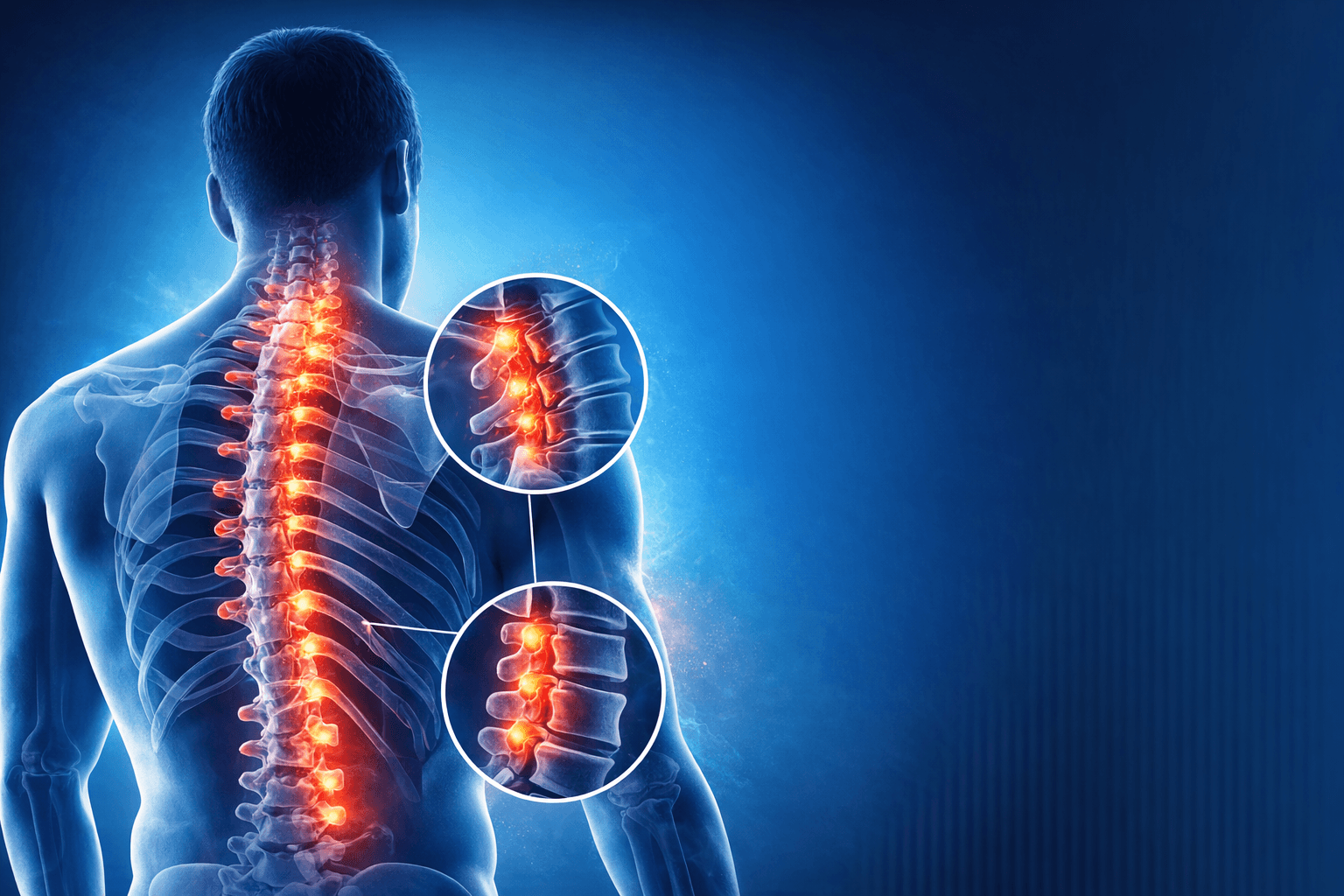
Chronic back pain and neck pain are often blamed on herniated discs, sciatica, or general wear and tear. But in many cases, the real source of pain may be much smaller: the facet joints.
These small joints sit at the back of the spine and help guide movement, provide stability, and prevent excessive motion. When they become irritated, inflamed, or worn down over time, they can cause persistent pain, stiffness, and reduced mobility. This condition is commonly called facet joint disease.
For many patients, facet joint disease can be frustrating because the pain may feel vague, mechanical, or difficult to pinpoint. It can affect the neck, mid-back, or lower back and may worsen with twisting, standing, bending backward, or certain daily movements. The good news is that once the source of pain is identified, there are several treatment options that may help, including conservative care, targeted injections, and minimally invasive procedures.
Quick Facts About Facet Joint Disease
Facet joint disease affects the small joints located at the back of the spine.
It can develop from aging, spinal arthritis, repetitive strain, or degeneration.
It may cause chronic back pain, neck pain, stiffness, and pain with movement.
Symptoms often feel worse with twisting, extension, or prolonged standing.
Many patients improve with non-surgical treatment, targeted injections, or image-guided procedures.
What Is Facet Joint Disease?
Facet joint disease is a condition in which the facet joints of the spine become irritated, inflamed, arthritic, or degenerated. These joints are located on both sides of each vertebra and help the spine move smoothly while staying stable.
When the cartilage within these joints wears down or the joint becomes inflamed, the movement of the spine can become painful. Over time, this may lead to ongoing discomfort, stiffness, and reduced flexibility.
In simple terms:
the facet joints help the spine move
degeneration or inflammation can make those joints painful
pain may become chronic if the underlying problem is not addressed
This is why facet joint disease is often discussed alongside terms like:
facet joint arthritis
facet syndrome
spinal osteoarthritis
chronic mechanical back pain
Where Facet Joint Disease Can Occur
Facet joint disease can affect different parts of the spine.
Common areas include:
Cervical spine – may cause neck pain, stiffness, and pain with turning the head
Thoracic spine – less common, but can cause upper or mid-back discomfort
Lumbar spine – often causes lower back pain, stiffness, and pain with extension or prolonged standing
The lumbar spine is one of the most common areas affected because it carries much of the body’s weight and is exposed to repeated motion and stress.
Facet Joint Disease Symptoms
The symptoms of facet joint disease can vary depending on the location of the affected joints and the severity of the inflammation or degeneration.
Common symptoms of facet joint disease include:
localized neck pain or lower back pain
stiffness after sleeping or prolonged sitting
pain that gets worse when twisting or bending backward
discomfort when standing for long periods
reduced range of motion
pain that feels mechanical rather than shooting or electric
soreness on one or both sides of the spine
Some patients also describe:
morning stiffness that improves slightly with movement
pain when getting up from a chair
discomfort after repetitive activity
pain that flares after standing, arching, or rotating the spine
tenderness near the affected spinal joints
New Sub-story
Add your content here...
Important note
Facet joint pain is often different from classic nerve pain. It may not always travel down the leg or arm the way sciatica or radiculopathy does. Instead, it often feels more centered in the spine and worsens with certain motions.
What Causes Facet Joint Disease?
Several factors can contribute to facet joint disease. In many patients, it develops gradually over time as part of spinal degeneration.
Common causes include:
age-related wear and tear
spinal osteoarthritis
repetitive strain on the spine
poor posture over time
previous spinal injury
disc degeneration that changes how the joints bear weight
inflammation within the joint
Risk factors may include:
older age
physically demanding work
obesity or excess body weight
past back or neck injuries
repetitive bending, twisting, or extension
degenerative changes elsewhere in the spine
As the discs lose height or spinal mechanics change, the facet joints can end up bearing more stress than they should. Over time, that can lead to pain, stiffness, and chronic inflammation.
How Facet Joint Disease Feels in Daily Life
One reason patients struggle to identify facet joint disease is that it often affects routine activities in subtle but persistent ways.
Patients may notice pain when:
turning in bed
looking over the shoulder while driving
standing in the kitchen too long
walking for extended periods
arching the back
rising from a seated position
doing repetitive chores or lifting
That is why this condition can feel exhausting. It may not always cause dramatic pain at first, but it can slowly wear down quality of life by making normal movement uncomfortable.
How Facet Joint Disease Is Diagnosed
Diagnosing facet joint disease usually starts with a clinical evaluation and a review of how the pain behaves.
Diagnosis may include:
a physical exam
a discussion of pain triggers and motion limitations
imaging such as X-rays, MRI, or CT when appropriate
review of degenerative changes in the joints
targeted diagnostic procedures when needed
Because imaging alone does not always prove that the facet joints are the pain source, doctors may sometimes use a diagnostic injection to confirm whether those joints are involved.
That is where targeted procedures like medial branch blocks become important. If the injection temporarily reduces the usual pain, it can help confirm that the facet joints are contributing to symptoms.
Facet Joint Disease vs Other Causes of Back Pain
Facet joint disease is not the only source of chronic spinal pain, so it is important to distinguish it from other common conditions.
Facet joint disease is more likely when pain is:
localized
mechanical
triggered by twisting or extension
worse with standing
associated with stiffness
Other conditions may be more likely when pain is:
sharp and radiating down the leg
associated with numbness or tingling
worsened by coughing or sneezing
clearly nerve-based
linked to large disc herniations or significant nerve compression
This is why a targeted diagnosis matters. Treating the wrong pain source can waste time and delay real relief.
Non-Surgical Treatment Options for Facet Joint Disease
Many patients with facet joint disease improve without surgery. In fact, treatment usually begins with conservative and minimally invasive options.
Common non-surgical treatments include:
activity modification
anti-inflammatory medication when appropriate
physical therapy if recommended
posture and movement education
core-strengthening strategies
image-guided injections
interventional pain procedures
If you want to explore broader conservative care pathways, your site already has a relevant internal page on non-surgical treatments for pain management that fits naturally with this topic.
Goals of non-surgical treatment
reduce inflammation
improve mobility
decrease pain with daily activity
avoid unnecessary surgery
identify the true pain source
create a more precise treatment plan
Injections for Facet Joint Disease
Targeted injections can play an important role in both diagnosing and treating facet joint disease.
These may include:
facet joint injections
medial branch block injections
other targeted interventional pain procedures
Why injections may help
they can reduce inflammation
they may provide temporary pain relief
they help confirm whether the facet joints are the true pain source
they can guide the next step in treatment
For patients with persistent pain that appears to come from the facet joints, these injections are often more useful than generalized treatment because they are more precise.
When Radiofrequency Ablation May Help
If a diagnostic block confirms that the facet joints are the source of pain, the next step may be a longer-lasting minimally invasive treatment called radiofrequency ablation.
Radiofrequency ablation may help by:
targeting the medial branch nerves
interrupting pain signals from the facet joints
providing longer-lasting relief than a diagnostic injection
helping reduce chronic pain without major surgery
Your site already has a directly relevant internal page on facet ablation / rhizotomy treatment, which is one of the strongest internal links for this blog topic.
When to Seek Care for Facet Joint Disease
You should consider evaluation if your pain is ongoing, recurrent, or interfering with movement and daily life.
Signs it may be time to seek care include:
chronic neck or back pain that lasts for weeks or months
repeated flare-ups
stiffness that limits activity
pain with twisting, standing, or extension
symptoms that do not improve enough with rest or basic care
uncertainty about what is actually causing the pain
Many patients do not realize that facet joint disease may be behind their chronic pain until a specialist evaluates how the pain behaves and which structures are most likely involved.
Who Is Most Likely to Benefit From Treatment?
Treatment is especially important for patients whose pain is:
chronic
function-limiting
clearly tied to spinal motion
recurring despite conservative care
affecting work, sleep, or quality of life
The longer chronic joint-related spine pain continues, the more it can influence posture, movement patterns, daily comfort, and long-term physical function.
How to Protect the Spine and Reduce Flare-Ups
Not all cases of facet joint disease can be prevented, but some habits may help reduce mechanical stress on the spine.
Helpful habits include:
maintaining a healthy weight
improving posture
avoiding repetitive twisting when possible
building core strength
staying active with safe movement
using better body mechanics during lifting
addressing chronic pain early instead of waiting for it to worsen
These steps may not reverse existing degeneration, but they may help reduce strain and support better long-term spine health.
Final Thoughts on Facet Joint Disease
Facet joint disease is a common but often overlooked source of chronic neck pain and back pain. Because the symptoms can feel vague or resemble other spinal problems, many patients do not realize the facet joints may be involved until they receive a more targeted evaluation.
The most important takeaways are:
facet joint disease can cause real, ongoing spinal pain
symptoms often worsen with twisting, standing, or extension
diagnosis may require more than imaging alone
many patients improve with non-surgical or minimally invasive treatment
targeted procedures can help confirm the pain source and guide the next step
When the right diagnosis is made, treatment becomes much more strategic and much less guess-based.
Because chronic spine pain can come from several different structures, the Mountain Spine & Orthopedics home page can also help you explore broader treatment options, specialist care, and the next steps available for ongoing neck and back pain.
Frequently Asked Questions
Answers to the most common patient questions about this topic.
What is facet joint disease?
Facet joint disease is a condition in which the small joints at the back of the spine become inflamed, arthritic, or degenerated, leading to chronic neck pain or back pain.
What are the main symptoms of facet joint disease?
Common symptoms include localized spinal pain, stiffness, pain with twisting or bending backward, reduced range of motion, and discomfort with prolonged standing.
Is facet joint disease the same as a herniated disc?
No. A herniated disc and facet joint disease are different conditions. Facet joint disease involves the small joints of the spine, while disc problems involve the cushioning discs between vertebrae.
Can facet joint disease be treated without surgery?
Yes. Many patients improve with non-surgical treatment, including physical therapy, activity modification, anti-inflammatory strategies, targeted injections, and minimally invasive procedures.
What is the best treatment for facet joint disease?
The best treatment depends on the severity of symptoms, the location of the pain, and whether the facet joints have been confirmed as the source. Many patients benefit from a stepwise plan that may include conservative care, diagnostic injections, and radiofrequency ablation.
When should I see a specialist for facet joint disease?
You should consider evaluation if chronic back pain or neck pain is limiting daily life, keeps returning, or has not improved enough with basic treatment.