If chronic back pain or neck pain keeps coming back, you may start hearing about different spine injections and wondering which one actually fits your symptoms. One option many patients research is a medial branch block injection.
This procedure is often used when a specialist suspects that pain may be coming from the facet joints, the small joints in the back of the spine that help with stability and movement. A medial branch block can help determine whether those joints are the source of pain, and in some cases it may provide short-term relief.
For many patients, this is not just “another injection.” It is a more targeted step that helps answer an important question: Is your pain actually coming from the facet joints, or is something else causing it?
What Is a Medial Branch Block Injection?
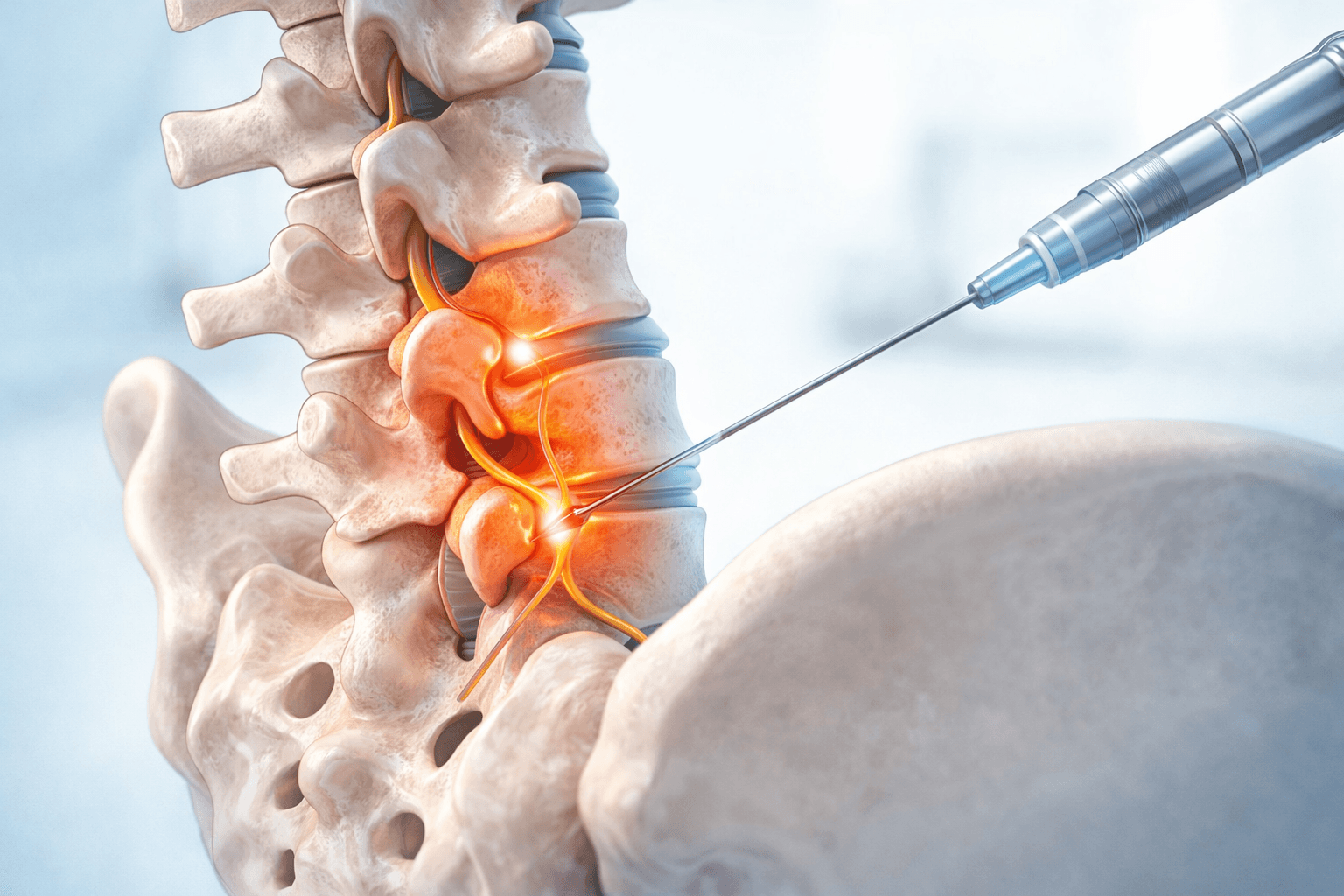
A medial branch block injection is a targeted injection placed near the medial branch nerves. These small nerves carry pain signals from the facet joints in the spine to the brain.
When the facet joints become irritated from wear and tear, arthritis, inflammation, or repetitive strain, they can cause ongoing pain and stiffness. Instead of treating pain broadly, this procedure focuses on a specific pathway.
In simple terms:
The facet joints may be the pain source.
The medial branch nerves carry those pain signals.
The injection helps test whether blocking those nerves reduces your pain.
This is one reason the procedure is so valuable. It helps narrow down the source of pain rather than relying only on symptoms or imaging.
If your doctor suspects facet-related pain, it may also make sense to learn more about facet joint disease and how it can contribute to chronic spinal discomfort.
Who May Be a Good Candidate?
A medial branch block is often considered for patients who have axial pain, meaning pain centered in the neck or back rather than pain mainly shooting down the arm or leg.
You may be a candidate if you have:
chronic neck pain
chronic lower back pain
pain that feels worse with twisting or arching backward
stiffness after sitting, sleeping, or standing too long
pain suspected to come from facet joints
ongoing symptoms that have not improved enough with conservative treatment
It may be less useful when pain is mainly caused by:
a large disc herniation
severe nerve root compression
classic sciatica as the main symptom
pain sources outside the facet joints
This is why the right diagnosis matters. The goal is not to use every injection for every kind of pain. The goal is to match the procedure to the most likely pain generator.
Common Symptoms That May Point to Facet-Related Pain
Facet-related pain does not feel exactly the same in every patient, but there are some common patterns.
Patients often describe:
localized back pain on one or both sides of the spine
neck pain that gets worse with rotation or extension
stiffness in the morning or after inactivity
pain with standing for long periods
pain that feels mechanical rather than electric or shooting
discomfort that flares with repetitive motion
Some patients also notice:
pain when getting up from a seated position
pain when leaning backward
reduced range of motion
soreness after activity
pain that improves somewhat with rest
How the Procedure Works
A medial branch block is usually performed as an outpatient procedure using imaging guidance.
Step-by-step overview:
You are positioned so the treatment area can be accessed safely.
The skin is cleaned and prepared.
A numbing medication is used on the skin.
Imaging guidance helps the specialist place the needle accurately.
Medication is injected near the targeted medial branch nerves.
You are monitored briefly afterward and usually go home the same day.
What makes this procedure different?
It is targeted.
It is minimally invasive.
It is often used to confirm the pain source.
It may help guide the next step in treatment.
Is It a Diagnostic Injection or a Treatment?
It is often primarily diagnostic, but it may also provide temporary relief.
That means the injection is commonly used to determine whether the facet joints are actually causing your pain. If your pain drops significantly after the injection, that gives your specialist a strong clue that the medial branch nerves are involved.
Why that matters:
it helps avoid guesswork
it can confirm a treatment pathway
it helps determine whether you may be a candidate for a longer-lasting procedure
For patients who want to avoid jumping too quickly into surgery, this fits naturally into a broader non-surgical treatment for pain management approach.
How Long Does Pain Relief Last?
Pain relief after a medial branch block can vary from patient to patient.
Some patients experience:
only a short period of relief
several hours of reduced pain
temporary improvement that helps confirm the diagnosis
mild reduction in symptoms rather than full relief
Important point:
The injection does not need to provide long-term relief to be useful.
In many cases, the real value is the information it provides. If your pain improves for the expected period after the injection, that helps your specialist determine that the facet joints are likely involved.
So when patients ask, “How long does a medial branch block last?” the better question is often:
Did it reduce my usual pain enough to confirm the diagnosis?
What Happens If the Injection Works?
If you get meaningful pain relief after the injection, your specialist may discuss a next-step procedure that aims for longer-lasting relief.
That next step is often radiofrequency ablation.
If the block works, the treatment path may look like this:
chronic pain suggests possible facet involvement
medial branch block is performed
pain decreases in a meaningful way
facet-mediated pain becomes more likely
radiofrequency ablation may be recommended for longer-term relief
If you want to understand that next step, the most relevant internal treatment page is facet ablation / rhizotomy treatment.
What If the Injection Does Not Help?
A medial branch block can still be useful even if it does not relieve your pain.
A negative response may mean:
the facet joints are not the main pain source
another structure may be causing the pain
additional evaluation is needed
a different type of treatment may be more appropriate
Possible alternative pain sources include:
discs
nerve compression
sacroiliac joint issues
muscular pain
other spinal structures
This is important for patient expectations. A result that rules something out is still valuable because it keeps the treatment plan moving in the right direction.
Benefits and Risks of a Medial Branch Block
Potential benefits include:
more precise diagnosis
targeted evaluation of facet-related pain
temporary pain relief in some cases
better decision-making about next-step treatment
avoiding more generalized or less relevant treatments
helping determine whether radiofrequency ablation may help
Why patients like this approach:
it is more focused than guessing
it can clarify the source of chronic pain
it may reduce uncertainty
it helps create a more strategic treatment plan
Possible Side Effects and Risks:
Like any injection procedure, medial branch blocks can have risks and side effects, even though they are generally considered minimally invasive.
Common short-term side effects may include:
soreness at the injection site
temporary discomfort
mild swelling
brief numbness
temporary increase in pain before improvement
Less common but important risks can include:
infection
bleeding
allergic reaction
medication-related side effects
incomplete pain relief
no diagnostic benefit if results are unclear
Patients usually do best when they understand in advance that the goal is not just immediate comfort, but also accurate information.
Recovery and What to Expect Afterward
Recovery is usually fairly straightforward.
Most patients can expect:
same-day discharge
light activity afterward unless told otherwise
a short observation period
instructions to monitor their pain response carefully
After the procedure, your doctor may ask you to:
pay attention to your usual pain triggers
notice whether daily movement feels easier
keep a pain diary for several hours
avoid overexertion the same day
report how much relief you felt and how long it lasted
That monitoring period is important because it helps interpret the result more accurately.
Medial Branch Block vs Radiofrequency Ablation
These two treatments are closely related, but they are not the same.
Medial branch block:
often diagnostic
temporarily blocks the pain signal
helps identify whether facet joints are the source
Radiofrequency ablation:
often therapeutic
uses heat to disrupt the pain-carrying nerves
aims for longer-lasting relief
A simple way to think about it:
the block helps confirm
the ablation helps extend relief
When to See a Spine Specialist
You should consider evaluation if your pain is ongoing, recurring, or interfering with daily life.
It may be time to see a specialist if:
back or neck pain has lasted for weeks or months
symptoms keep returning
conservative care has not helped enough
you still do not know what is causing the pain
motion, posture, or daily activity regularly trigger pain
you want a more targeted treatment plan
Many patients get frustrated not because they have no treatment options, but because they have no clear diagnosis. A medial branch block can be useful when the next step needs to be more precise.
Final Thoughts
A medial branch block injection is not just a generic pain shot. It is a targeted procedure that can help determine whether facet joints are driving chronic neck or back pain.
The biggest reasons this procedure matters:
it helps narrow down the pain source
it may provide temporary relief
it can help determine whether radiofrequency ablation is the right next step
it supports a more strategic, less guess-based treatment plan
For the right patient, that clarity can be just as valuable as the short-term relief itself.
If you are still looking for answers, the Mountain Spine & Orthopedics home page is a helpful place to explore our specialists, treatment philosophy, and next steps for back and neck pain care.
Frequently Asked Questions
Answers to the most common patient questions about this topic.
What is a medial branch block injection used for?
It is used to help determine whether pain is coming from the facet joints in the spine and may also provide temporary pain relief.
Is a medial branch block the same as an epidural steroid injection?
No. A medial branch block targets nerves that carry pain from the facet joints, while an epidural steroid injection is used more often for irritated spinal nerves and radiating pain.
How long does a medial branch block last?
Pain relief can vary, but the main goal is often to see whether the injection reduces your typical pain pattern enough to confirm the diagnosis.
What happens if a medial branch block works?
If it significantly reduces your pain, your doctor may recommend radiofrequency ablation as a longer-lasting next step.
Is recovery difficult?
Recovery is usually mild compared with surgery. Most patients go home the same day and mainly need to monitor how their pain responds after the injection.
Can this injection cure chronic back pain?
It is usually better understood as a diagnostic and short-term interventional tool rather than a permanent cure. Its value is often in confirming the pain source and guiding the next step in treatment.