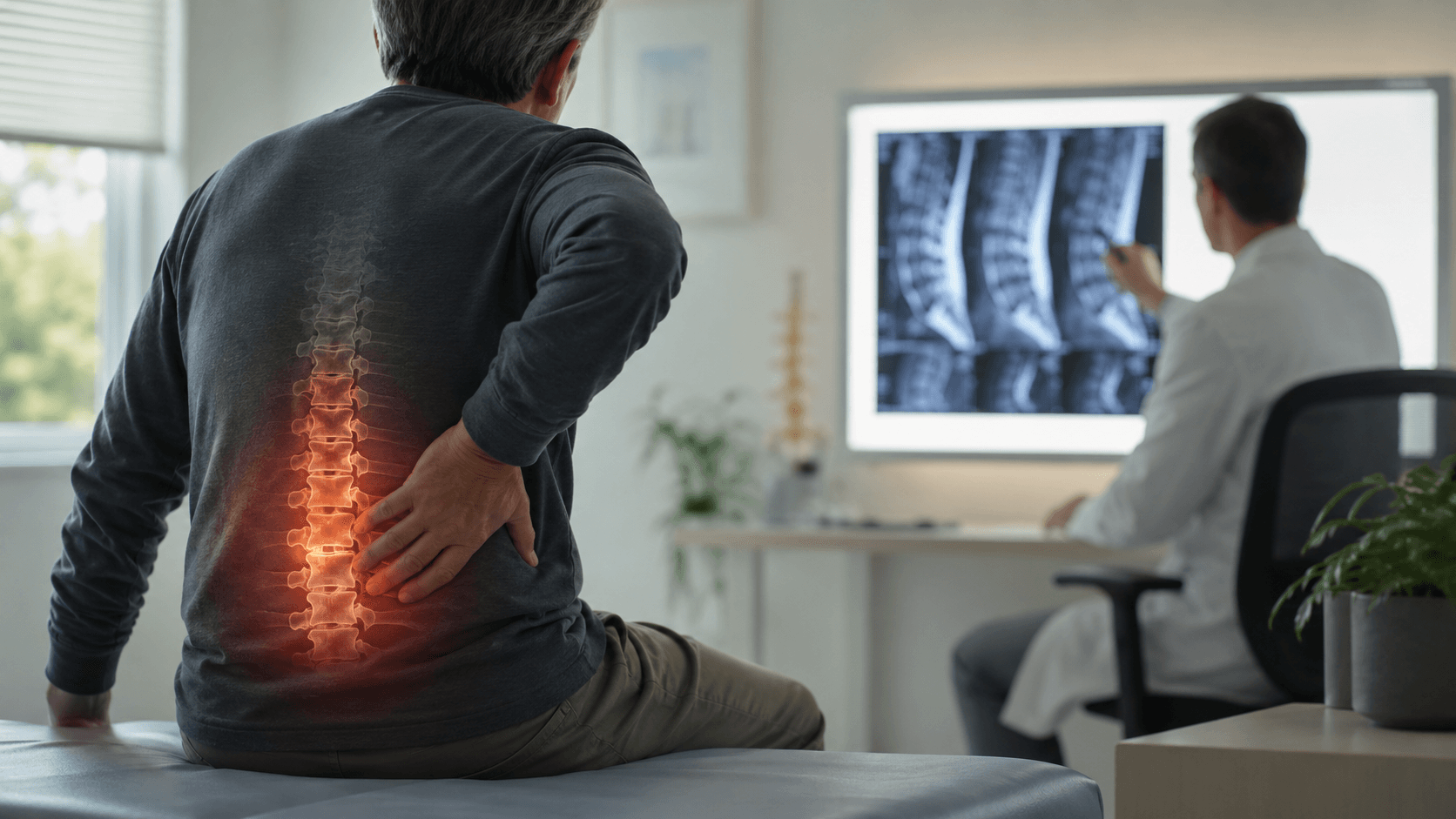
Do You Really Need Spinal Stenosis Surgery?
If you've been diagnosed with spinal stenosis and your doctor has mentioned surgery, you've probably searched "spinal stenosis surgery success rate" trying to figure out if it's actually worth it — or if you should keep pushing through with medication and physical therapy.
Here's the direct answer: spinal stenosis surgery works well for the right candidate, and works poorly for the wrong one. The published success rates you'll find online — often cited in the 80-90% range for relief of leg symptoms — aren't a universal guarantee. They're an average pulled from a specific patient population: people with confirmed nerve or spinal cord compression on imaging that matches their symptoms, who've already tried and exhausted reasonable non-surgical care.
The real question isn't "does spinal stenosis surgery work." It's "am I the patient this data is describing." This article breaks down what spinal stenosis surgery actually involves, who genuinely benefits, what the success rate numbers do and don't tell you, and how to know whether it's time to move forward or keep waiting.
What Spinal Stenosis Surgery Actually Does
Spinal stenosis is a narrowing of the spaces within your spine that puts pressure on the nerves traveling through it. Surgery doesn't "cure" the underlying narrowing in the sense of reversing aging or arthritis — it physically creates more room for the compressed nerves, which is what relieves the pain, numbness, weakness, or leg fatigue caused by that compression.
The most common procedure is a lumbar decompression, sometimes called a laminectomy, where the surgeon removes the portion of bone or ligament that's crowding the nerve. In cases where the vertebrae are also unstable — meaning they shift or slip relative to each other — decompression may be combined with a fusion to stabilize that segment. Increasingly, many patients qualify for minimally invasive spinal stenosis surgery, performed through smaller incisions with less muscle disruption, which can mean a faster recovery than traditional open decompression.
The procedure your surgeon recommends depends entirely on where the narrowing is (central canal vs. the nerve exit points, called foramina), how many levels are involved, and whether instability is part of the picture. This is exactly why two people with the same "spinal stenosis" diagnosis can end up with very different surgical plans.
What the Success Rate Numbers Actually Mean
This is where most articles either oversell the statistics or bury them in vague reassurance. Here's the honest breakdown.
What the data generally shows: For patients with confirmed lumbar spinal stenosis and leg-dominant symptoms — pain, numbness, or heaviness that worsens with walking or standing and improves with sitting or leaning forward — decompression surgery has consistently strong outcomes for relieving that specific leg pain. This is the population the frequently cited success rates are describing.
What the data doesn't promise: Surgery is far less predictable for pure back pain without leg symptoms, for patients whose imaging findings don't clearly match their symptom pattern, and for patients with significant other contributing conditions like hip arthritis or peripheral neuropathy that can mimic stenosis symptoms. Success rate statistics also can't account for individual factors like bone quality, overall health, smoking status, and how long the nerve has been compressed before treatment — compression that's gone on for years tends to recover less completely than compression caught earlier.
The pattern that predicts a good surgical outcome is consistent: leg symptoms that outweigh back pain, imaging that matches the exam, and a clear response to nerve-specific treatments like epidural injections beforehand. When those three things line up, the odds genuinely favor surgery. When they don't, the odds shift — which is exactly why a surgeon's job isn't just confirming stenosis exists on your MRI, but confirming it's actually the source of what you're feeling.
When Surgery Makes Sense — and When It Doesn't Yet
Surgery is typically the right conversation when:
Walking distance keeps shrinking — you can go a block, then half a block, then just a few steps before leg pain or heaviness forces you to stop and lean forward
Leg symptoms (pain, numbness, weakness) are worse than your back pain, not the other way around
You've tried physical therapy, activity modification, medication, and epidural steroid injections without lasting relief
You're developing weakness — foot drop, difficulty with stairs, or a leg that feels like it's "giving way"
Your imaging clearly shows narrowing at the level matching your symptoms
It's usually still worth waiting or trying more conservative care when:
Back pain is your primary complaint with minimal leg involvement
Symptoms are mild and not progressively worsening
You haven't yet tried image-guided injections, which can be both diagnostic and therapeutic
Imaging shows stenosis, but at a different level than where your symptoms suggest the problem is
This is the nuance that gets lost in generic "here's what spinal stenosis surgery is" content. Stenosis shows up on a huge number of MRIs as people age — the presence of narrowing on a scan doesn't automatically mean it's the cause of your pain, or that it needs to be fixed surgically. A careful surgeon correlates the imaging with a hands-on exam and your actual symptom pattern before recommending anything.
Spinal Stenosis Surgery Recovery — What to Actually Expect
Recovery timelines vary significantly based on whether you had a straightforward decompression or a decompression combined with fusion, and whether it was performed as a minimally invasive or traditional open procedure.
Day of surgery to first week: Many minimally invasive decompression patients go home the same day or after one night. Walking is encouraged almost immediately — in fact, most patients notice leg pain relief right away, even before the incision has healed, because the nerve pressure is gone.
Weeks 2–6: Activity gradually increases. Most patients are off narcotic pain medication and resuming light daily activities within this window.
Weeks 6–12: For decompression-only patients, this is often when most people feel largely back to normal. If fusion was involved, this is still an active healing window for the bone.
Months 3–6: Full activity clearance, particularly for fusion cases, typically happens once follow-up imaging confirms adequate healing.
The detail that surprises most patients: leg pain relief from decompression is often immediate, while back pain and surgical-site soreness take longer to settle. If your primary complaint going in was leg pain, that's usually the first thing to improve — sometimes dramatically, within days.
Minimally Invasive vs. Traditional Decompression
Not every patient is a candidate for a minimally invasive approach, but when it's appropriate, the tradeoffs matter. Minimally invasive spinal stenosis surgery uses smaller incisions and specialized instruments to access the same compressed nerves with less disruption to the surrounding muscle. This generally translates to less post-operative pain, a shorter hospital stay, and a faster return to daily activity compared to traditional open decompression.
That said, minimally invasive isn't automatically "better" for every case — multi-level stenosis, significant instability, or complex anatomy can sometimes still require a more traditional open approach to safely and completely decompress the nerve. This is a decision that depends on your specific imaging and anatomy, not a preference you can request independent of what your case actually needs.
Getting a Clear Answer Before You Decide
If you're stuck deciding whether spinal stenosis surgery is the right next step, the most useful thing you can do isn't more research — it's getting your specific imaging and symptoms reviewed by a spine specialist who can tell you plainly which category you fall into.
Mountain Spine & Orthopedics offers a complimentary MRI review for patients who already have imaging and want a direct read on whether their stenosis matches their symptoms. If you've already been told you need surgery and want confirmation before moving forward, a second opinion can clarify whether that's the right call or whether other options are still reasonable to try first. And if you're earlier in the process and unsure where you stand, a candidacy check is the fastest way to find out.
Frequently Asked Questions
Answers to the most common patient questions about this topic.
What is the success rate of spinal stenosis surgery?
For patients with confirmed nerve compression and leg-dominant symptoms that match their imaging, decompression surgery has strong outcomes for relieving leg pain, numbness, and heaviness. Success rates are lower when back pain is the primary complaint or when symptoms and imaging don't clearly correlate.
Can spinal stenosis be fixed without surgery?
Many cases improve with physical therapy, activity modification, medication, and image-guided epidural steroid injections, especially when symptoms are mild or moderate. Surgery becomes more clearly indicated when conservative treatment fails, symptoms progressively worsen, or weakness develops.
How long does it take to recover from spinal stenosis surgery?
Minimally invasive decompression-only patients often feel largely recovered within 6 to 12 weeks, with leg pain relief frequently noticeable within days of surgery. Cases involving fusion have a longer healing timeline, often 3 to 6 months for full activity clearance.
Is minimally invasive spinal stenosis surgery better than traditional surgery?
For appropriate candidates, minimally invasive decompression generally means less post-operative pain, a shorter hospital stay, and faster recovery. It isn't right for every case — multi-level stenosis or significant spinal instability may still require a traditional open approach.
How do I know if I need spinal stenosis surgery?
Key signs include shrinking walking distance due to leg pain or heaviness, leg symptoms that outweigh back pain, new or worsening weakness, and lack of lasting relief from physical therapy, medication, or injections. An MRI review combined with a physical exam is the most reliable way to confirm candidacy.
What's the difference between spinal stenosis surgery and spinal fusion?
Decompression surgery removes bone or tissue compressing a nerve without addressing spinal alignment. Fusion is added when there's also instability — vertebrae shifting or slipping — to stabilize that segment permanently. Not every stenosis patient needs fusion; it depends on whether instability is present.