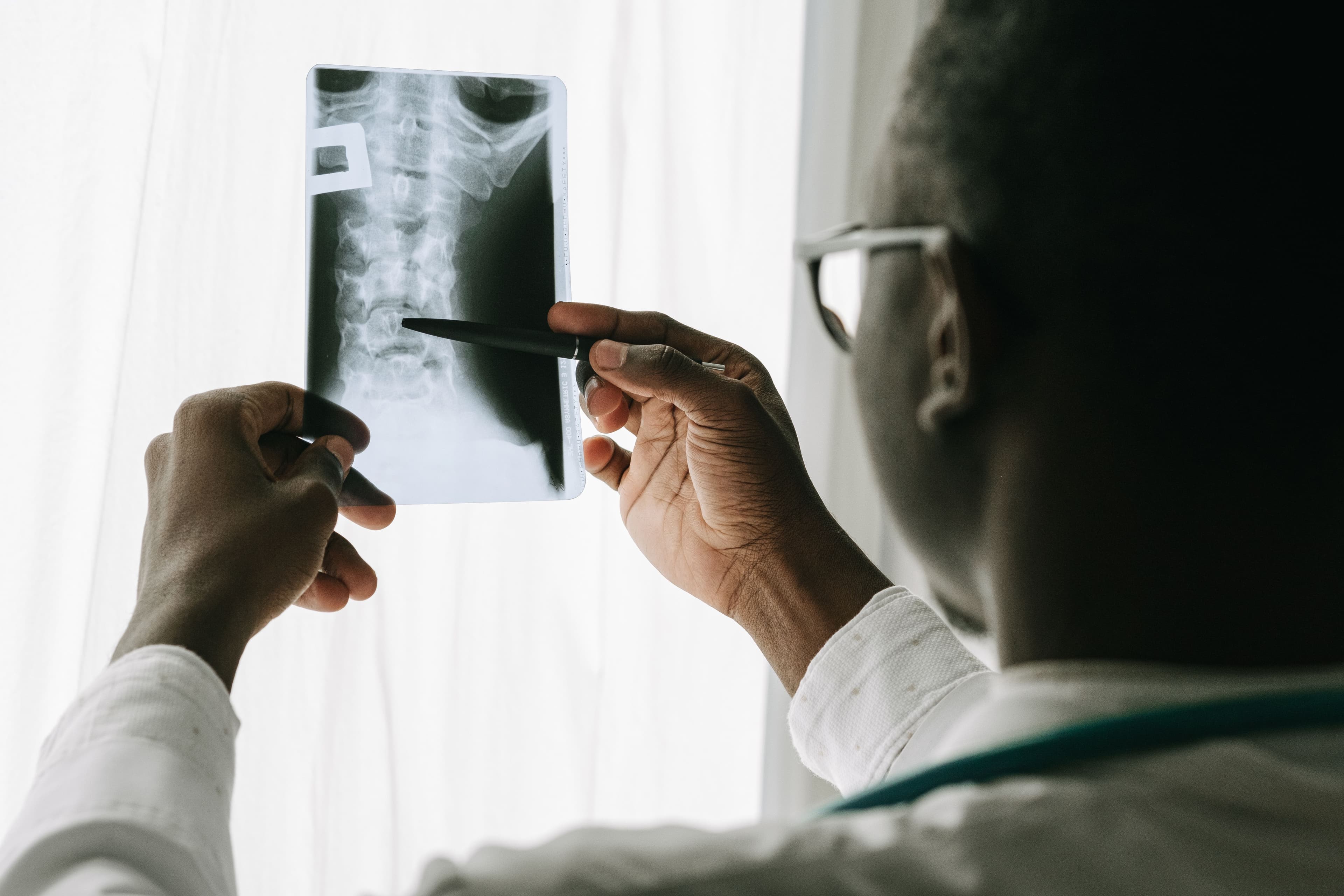
Robotic spine surgery is a minimally invasive technique in which your surgeon uses a robotic guidance system to plan and carry out precise placement of screws, rods or implants during a spine procedure. The name causes the biggest misunderstanding: the robot does not operate on you. Your surgeon remains in control of every step, and the system functions as an advanced positioning and navigation tool built around your own anatomy.
Quick answer: is a robot doing my surgery?
No. Think of it less like an autonomous machine and more like an extremely precise GPS mounted to the operating table. Before your surgeon places a single screw, the system has already mapped your spine in three dimensions from your own imaging and built a plan around exactly where hardware needs to go to hold your spine correctly. During surgery, the system holds a guide steady at that exact point so your surgeon's instrument follows the planned path. Your surgeon still makes every cut, every placement and every judgment call.
How robotic guidance actually works, step by step
This is the part most explanations skip. Here is what actually happens, in order.
1. Imaging and planning, before you are in the operating room
A CT scan, and often an MRI, is loaded into the robotic system's software. Your surgeon uses that 3D model of your spine to plan the exact size, angle and position of every screw or implant your procedure calls for, based on your own bone anatomy rather than a generic template.
2. Registration in the operating room
Once you are positioned for surgery, the system takes a fresh set of images or uses optical tracking to match your actual spine, in the room, to the surgical plan built beforehand. This step is what lets the system stay accurate even though your position on the table is not identical to the position during the original scan.
3. Guided placement
A robotic arm or a mounted guide holds a tube or frame steady at the planned trajectory. Your surgeon passes the instrument through that guide by hand. The robot supplies the steady, exact angle. Your surgeon supplies the movement, the feel, and the decision to proceed.
4. Confirmation before closing
A final image confirms every screw or implant sits where the plan intended before the incision is closed. This is also where a surgeon would catch and correct anything that needs adjusting.
Robotic guidance compared with traditional minimally invasive and open surgery
| Open surgery | Standard minimally invasive | Robotic guided | |
|---|---|---|---|
| Incision size | Larger, muscle retraction | Small, tube based | Small, tube based |
| How placement is guided | Direct sight and feel | X-ray images and surgeon experience | Pre-built 3D plan plus live guidance |
| Radiation exposure | Variable | Repeated X-ray shots during placement | Often lower, since the plan is built once and confirmed rather than repeatedly imaged |
| Best suited for | Complex anatomy, tumors, trauma | Straightforward one or two level cases | Cases where precise, pre-planned hardware placement matters most, including scoliosis correction and revision surgery |
None of these approaches is universally better. Your surgeon chooses based on your specific anatomy, the procedure you need, and what has worked reliably for similar cases.
What robotic guided spine surgery actually treats
Robotic guidance is a technique applied within several different procedures, not a procedure on its own. It is most commonly used for:
- Spinal fusion for degenerative disc disease, where precise screw placement matters for how well the fusion holds over time
- Spinal stenosis cases that need decompression combined with fusion for stability
- Adult scoliosis correction, where the curve and rotation of the spine make freehand screw placement harder to judge and get right the first time
- Revision surgery, where scar tissue and altered anatomy from a prior operation make the original landmarks harder to see
If your surgeon is discussing spinal fusion or decompression surgery with you, robotic guidance may or may not be part of the plan depending on your specific case.
What recovery actually looks like
Recovery follows the underlying procedure, not the robotic guidance itself. A general pattern for a minimally invasive, robotically guided lumbar fusion looks like this, though your own timeline depends on which levels were involved and your overall health.
- First few days: pain management and getting up and walking short distances, usually the same day or the day after surgery
- Two to four weeks: light daily activity, short walks, no heavy lifting or twisting
- Six to twelve weeks: gradual return to more normal activity as the fusion begins to stabilize
- Several months: full bony fusion, confirmed on imaging, with activity restrictions lifted based on that confirmation rather than a fixed calendar date
Scoliosis correction and multi level fusions generally take longer at every stage. Ask your surgeon for a timeline built around your specific procedure.
Is robotic guidance the right choice for you?
That depends on your condition, your imaging and what your surgeon's evaluation finds, not on wanting the newest technology for its own sake. Questions worth asking at a consultation:
- Does my specific procedure benefit from robotic guidance, or would a standard approach serve me just as well?
- What does my imaging show about how much correction or fusion I need?
- What is a realistic recovery timeline for my case specifically?
- What happens if something needs to be adjusted during surgery?
A spine surgeon who reviews your MRI or CT and your surgical history can answer these directly. If you are dealing with spinal stenosis, a scoliosis curve, or have already had one spine surgery and things have not improved, an evaluation is the next real step rather than more searching.
Frequently Asked Questions
Answers to the most common patient questions about this topic.
Is a robot actually performing my surgery?
No. Your surgeon operates throughout the procedure. The robotic system is a guidance and positioning tool, similar to a highly precise GPS for the operating room. It helps plan where screws and implants go and holds instruments steady at that exact position, but every cut, placement and decision is made by your surgeon's hands.
Is robotic spine surgery the same as laser spine surgery?
No, and the two terms get confused often. Robotic spine surgery refers to a specific, FDA cleared category of image guided robotic systems used to plan and place hardware with precision. "Laser spine surgery" is a marketing term, not a distinct surgical technique recognized by spine surgeons, and lasers are not typically used to cut bone or remove disc material in the procedures this article describes.
What conditions can robotic guided spine surgery treat?
It is most often used for spinal fusion, including for degenerative disc disease and spinal stenosis, and for correcting adult scoliosis curves. It can also help with revision surgery, where the anatomy from a prior operation makes standard placement harder to judge by eye alone.
How long does recovery take after robotic guided spine surgery?
Recovery depends on the underlying procedure, not on the fact that it was robotically guided. A single level lumbar fusion done with minimally invasive, robotic assisted technique often allows a return to light daily activity within two to four weeks, with full healing of the fusion taking several months. Multi level fusions and cases involving more extensive correction take longer. Your surgeon will give you a timeline specific to your procedure and your health.
Is robotic spine surgery safer than traditional surgery?
Robotic guidance has been shown in published research to improve the accuracy of screw placement compared with placing screws by feel and X-ray alone, and more accurate placement is linked to fewer hardware related complications and revision surgeries. It does not eliminate the general risks of spine surgery, such as infection, bleeding or nerve irritation, and no surgery removes risk entirely. The technology is a tool that supports precision, not a guarantee of outcome.
Who is a good candidate for robotic guided spine surgery?
Candidacy depends on your specific condition, imaging and overall health, not on wanting the newer technology. People with degenerative disc disease, spinal stenosis, a scoliosis curve significant enough to need correction, or a need for revision surgery are commonly evaluated for it. Your surgeon reviews your MRI or CT and your surgical history to decide whether robotic guidance adds a real benefit for your specific anatomy.