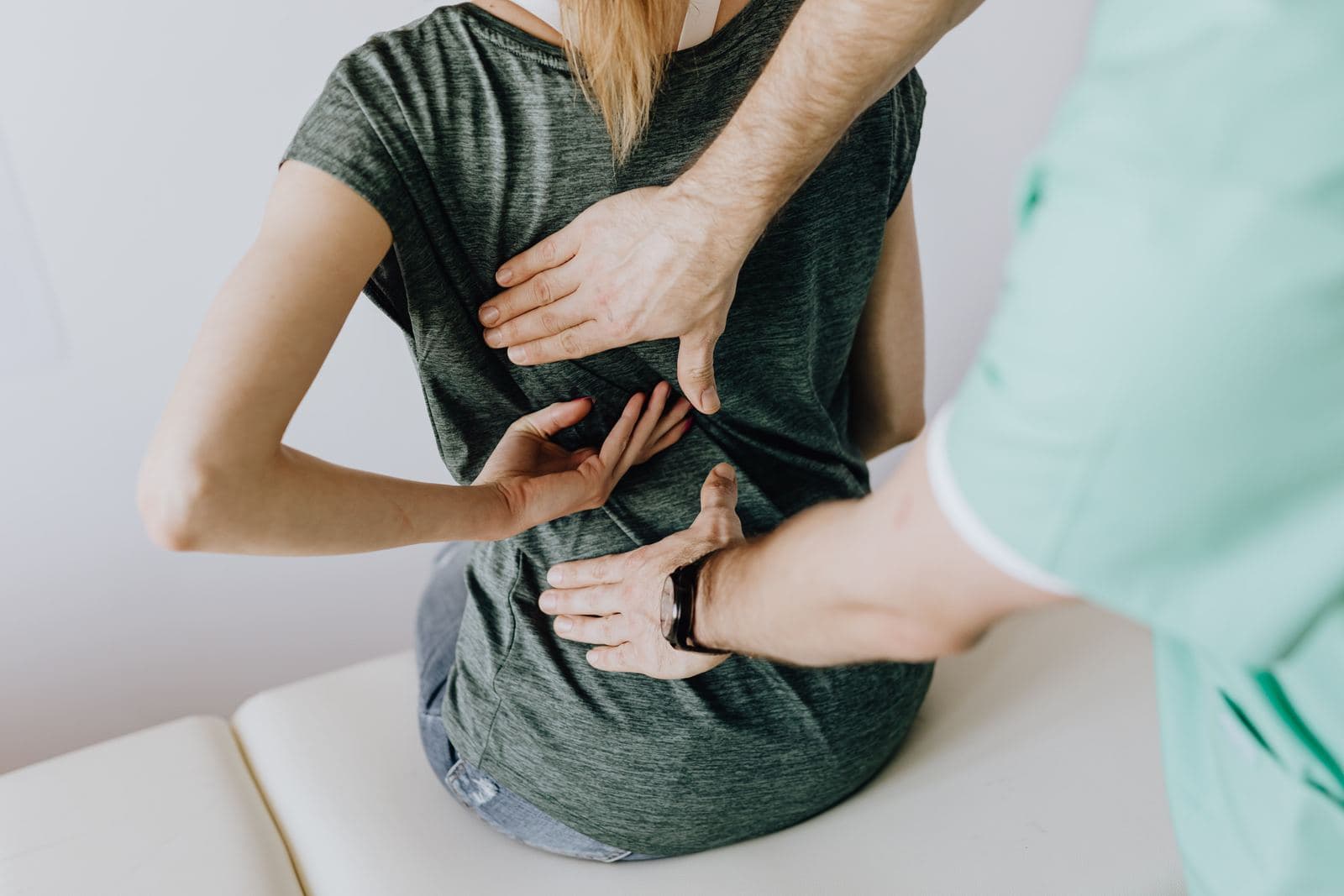
Your lower back hurts and you want it to stop. Most lower back pain eases on its own, and a few simple steps can make the days in between easier. You do not need a long list of tricks. You need to know what helps, what to skip, and which signs mean the pain is not the ordinary kind.
Quick answer: how to relieve lower back pain
Keep moving gently, use heat for comfort, and take an anti-inflammatory pain reliever if it is safe for you. Skip long stretches of bed rest. For most people the pain improves over days to a few weeks. Get seen promptly if the pain comes with leg weakness, numbness, bladder or bowel changes, or a fever, and get it checked anyway if you are not clearly better after a few weeks.
The American College of Physicians (ACP) guideline on low back pain starts from the same point: most people with acute or subacute low back pain improve over time regardless of treatment. So the aim of home care is comfort and staying mobile while your back settles, not a cure.
What helps in the first few days
These steps have the best support behind them.
Keep moving instead of resting in bed
Stay as active as your pain allows and keep up your normal routine. The NHS advises people with back pain to stay active and not to stay in bed for long periods. A Cochrane review of trials on this question found that, for acute low back pain, advice to stay active gave small improvements in pain and function compared with advice to rest in bed. For sciatica, it found little or no difference between the two.
Walking is the easiest place to start. The NHS lists walking, swimming, yoga and Pilates as activities that may help ease back pain. Keep the walks short at first and build up as it gets easier. If the pain gets worse, stop.
Heat first, ice if it feels better
The ACP guideline rates the evidence for superficial heat as moderate quality for acute and subacute low back pain, a step above the low-quality evidence behind massage, acupuncture and spinal manipulation. A heating pad or warm pack on the sore area is an easy way to use it. The NHS suggests a heat pack for stiffness or muscle spasm and an ice pack for pain and swelling, wrapped in a towel either way. If one feels better to you than the other, use that one. Heat has the better research behind it, so it is a sensible first choice.
Pain relievers: what the research says
If you want medicine, the ACP guideline points to NSAIDs (nonsteroidal anti-inflammatory drugs such as ibuprofen) or muscle relaxers for acute and subacute low back pain, based on moderate-quality evidence. Muscle relaxers need a prescription, so that is a conversation with a doctor.
Ibuprofen is not for everyone. The NHS says it may not be suitable if you have had a stomach ulcer, or have asthma or a heart, liver or kidney condition. It advises taking the smallest dose for the shortest time, and not combining it with other NSAIDs such as naproxen or aspirin. If you are unsure, ask a pharmacist.
Acetaminophen (paracetamol) may help less than people expect. In the PACE trial, which randomized about 1,650 people with acute low back pain, people taking acetaminophen recovered in a median of 17 days, against 16 days for placebo. The NHS says paracetamol on its own is not recommended for back pain.
Gentle exercise once the worst has passed
As the worst of the pain eases, add simple stretching and core work. Mayo Clinic publishes a 15-minute routine built from moves such as a knee-to-chest stretch, a lower back rotational stretch, a bridge and a cat stretch. It suggests starting with a few repetitions and building up as each move gets easier, and it advises talking to a physical therapist or another member of your healthcare team if you are starting exercise because of ongoing back pain or an injury. The NHS also says to stop an exercise if your pain gets worse.
Physical therapy is a common next step when the pain is slow to ease. The NHS lists physiotherapy and group exercise sessions among the treatments offered when back pain has not improved after a few weeks. A therapist can tailor the exercises to you. Mountain Spine's back pain treatment page lists referrals to rehabilitation specialists as a non-surgical option, and our guide to orthopedic physical therapy explains what to expect. If your pain also runs down a leg, our guide to sleeping with sciatica covers night-time positions.
What to skip
- Days of bed rest. Resting on a bad day is fine. In the Cochrane review above, advice to stay active did slightly better than advice to rest in bed for acute low back pain.
- Pushing through pain that gets worse. The NHS says to stop exercises if your pain gets worse and to see a doctor for advice.
- Relying on acetaminophen alone. The PACE trial found no faster recovery than placebo.
- Doubling up on anti-inflammatories. The NHS warns that taking ibuprofen together with other NSAIDs such as naproxen or aspirin raises the risk of serious side effects such as stomach ulcers.
How long lower back pain usually takes to settle
Doctors describe back pain by how long it has lasted. The National Institute of Arthritis and Musculoskeletal and Skin Diseases uses three groups: acute pain usually lasts a few days to a few weeks, subacute pain lasts 4 to 12 weeks, and chronic pain lasts longer than 12 weeks.
Most of the improvement comes early. A meta-analysis of 33 cohorts of people with acute or persistent low back pain, 11,166 participants in all, found that average pain scores in the acute-pain cohorts fell from 52 out of 100 at the start to 23 at six weeks. Improvement then slowed, to 12 at 26 weeks and 6 at one year. The researchers noted that some people, especially those whose pain had already become persistent, still had low to moderate pain a year later.
That is why both the NHS and NIAMS say to see a doctor if your pain has not improved after a few weeks. Average improvement slows after about six weeks, so a long stretch with little change is a reason to find out why, not to keep waiting.
Do you need an X-ray or MRI?
Usually not at first. The ACP's advice on imaging says scans are indicated for low back pain only if there are severe or progressive neurologic deficits, or signs or symptoms that suggest a serious or specific underlying condition. ACP's own announcement of the advice also includes people who are candidates for invasive interventions. For other people, it says routine imaging is not associated with clinically meaningful benefits but can lead to harms.
One reason is that scans pick up changes that are common and often harmless. A systematic review of imaging in people with no back pain found disc degeneration in 37% of 20-year-olds and 96% of 80-year-olds, and disc bulges in 30% and 84%. The authors concluded that many of these findings are likely part of normal aging and unassociated with pain. A scan report full of frightening words can describe a back that is ordinary for your age, which is why the findings have to be read alongside your symptoms.
At Mountain Spine, you do not always need an MRI before your first visit. The doctor may examine you first and decide which study, if any, will answer the clinical question. Before an injection, the plan follows a consultation and a review of imaging. If you already have scan results and want a specialist's read of them, you can send them through the practice's free MRI review.
Signs that should not wait
Ordinary back pain is uncomfortable, not dangerous. A small number of signs point to something that needs care quickly.
Call 911 or go to an emergency room if back pain comes with any of these, using the NHS list:
- Pain, tingling, weakness or numbness in both legs
- Loss of feeling around the genitals or anus
- New bladder or bowel changes, such as trouble passing urine or losing control of urine or stool
- New changes in how your genitals feel during sex, or new trouble with erections or orgasm
- Chest pain
- Pain that began after a serious accident, such as a car crash
Numbness in the saddle area or new bladder or bowel changes can each point to cauda equina syndrome, a rare condition in which the bundle of nerves at the lower end of the spinal canal is compressed. You do not need to have both. It is a medical emergency that can need urgent surgery, and delay raises the risk of lasting damage. Our guide to the ER versus an orthopedic doctor can help you decide where to go.
Get seen the same day if the pain comes with a fever, or you feel hot, cold, shivery or generally unwell, or if severe pain starts suddenly or is getting worse quickly. The NHS lists these as urgent.
Book an appointment soon if you have numbness or tingling, severe pain that does not improve with medicine, back pain after a fall or injury, weight loss you did not intend, pain that is worse at night or does not ease with rest, or a lump or change in the shape of your back. These come from NIAMS and the NHS. Our guide to why your back hurts has a longer list of red flags and the causes behind them.
When home care is not enough
If a few weeks of self-care have not helped, treatment usually builds in steps:
- A supervised exercise plan. Physical therapy is a common next step, and the NHS lists it among the treatments for back pain that has not improved after a few weeks. Mountain Spine's back pain treatment page lists referrals to rehabilitation specialists among its non-surgical options.
- Prescription medicine. The ACP guideline includes muscle relaxers for acute and subacute pain, and a doctor can check whether a medicine suits your health history.
- Injections. These are usually discussed when pain is stubborn or travels into a leg. In a Cochrane review of 25 trials of epidural steroid injections for sciatica, the injections probably reduced leg pain slightly in the short term, and the authors noted the effect was small. The practice's own page describes cortisone injections as a way to help break the cycle of pain and inflammation so that rehabilitation is easier. See cortisone injections for back pain and epidural steroid injections.
- Surgery. For ordinary back pain, it is usually a late step. The NHS says that if back pain is caused by a medical condition such as a slipped disc and other treatments have not helped, surgery may be an option. Our guide to bulging versus herniated discs explains how those two disc problems differ.
What a spine specialist visit adds
An appointment makes sense when back pain is not settling, keeps returning, or starts to limit walking, sitting, sleep, work or exercise. It also makes sense when the pain travels into a leg, or comes with numbness or weakness. Here is how a visit at Mountain Spine is laid out on the practice's back pain doctor page:
- You describe where and when the pain happens, what triggers it, any leg symptoms and what you have already tried.
- The doctor checks movement, tenderness, strength, sensation, reflexes and how you walk, to tell mechanical back pain from nerve involvement.
- Any scans you have are reviewed for findings that match your symptoms, separating common age-related changes from the ones likely to matter.
- The visit ends with next steps, which may include activity guidance, pain management, an injection, monitoring, more testing or a surgical discussion.
That exam is the part a web page cannot do. Two people with the same words for their pain can need very different plans.
Keeping it from coming back
Back pain can come back. The only inception cohort in a systematic review of recurrence reported that 33% of people who had recovered had a new episode within a year, although the reviewers rated the available research as low quality and said it does not give robust estimates. A history of earlier episodes was the only factor that consistently predicted another one.
NIAMS lists what raises the odds of back pain: poor fitness, including weak back and stomach muscles; weight gain; jobs with heavy lifting, pushing, pulling or twisting; sitting all day in an uncomfortable chair or with poor posture; long-term poor sleep, depression or anxiety; and overdoing exercise after a stretch of inactivity. Several of those are things you can change.
Your next step
Start with the basics above: keep moving, use heat, and be careful with medicine. If you are not clearly better after a few weeks, if the pain keeps coming back, or if it is limiting your day, have it examined. You can find a Mountain Spine doctor near you through the back pain doctor page.
Frequently Asked Questions
Answers to the most common patient questions about this topic.
What is the fastest way to relieve lower back pain?
There is no proven shortcut, but the steps with the best support are gentle movement instead of bed rest, heat on the sore area, and an anti-inflammatory such as ibuprofen if it is safe for you. Most acute low back pain improves over days to a few weeks. Get checked sooner if you have leg weakness, numbness, a fever, or any bladder or bowel changes.
Should I rest or stay active with lower back pain?
Stay as active as your pain allows. A Cochrane review found that for acute low back pain, advice to stay active gave small improvements in pain and function compared with advice to rest in bed. A short rest on a bad day is fine, but long periods in bed are not recommended by the NHS.
Is heat or ice better for lower back pain?
Both are reasonable for comfort, though heat has the better research behind it. The American College of Physicians guideline rates superficial heat as moderate-quality evidence for acute and subacute low back pain, and the NHS suggests heat for stiffness or muscle spasm and an ice pack for pain and swelling. Wrap either one in a towel and use whichever feels better.
Does acetaminophen help lower back pain?
Not much for acute low back pain. In the PACE trial, a large randomized trial of about 1,650 people with acute low back pain, people taking acetaminophen (paracetamol) recovered in a median of 17 days, compared with 16 days for placebo. The American College of Physicians points to NSAIDs or muscle relaxers instead, which may not suit everyone, so check with a pharmacist or doctor.
Do I need an MRI for lower back pain?
Usually not at first. The American College of Physicians advises imaging only when there are severe or progressive neurologic deficits, or signs of a serious underlying condition, and a doctor may also want imaging before an invasive procedure. Scans also find common changes in people with no pain at all, so a spine specialist reads them alongside your symptoms and exam.
When should I see a spine specialist for lower back pain?
See one if your pain has not improved after a few weeks, keeps returning, travels into a leg, or comes with numbness or weakness. Go to an emergency room right away for weakness or numbness in both legs, numbness around the genitals or anus, or new bladder or bowel changes, such as trouble passing urine or losing control of it.