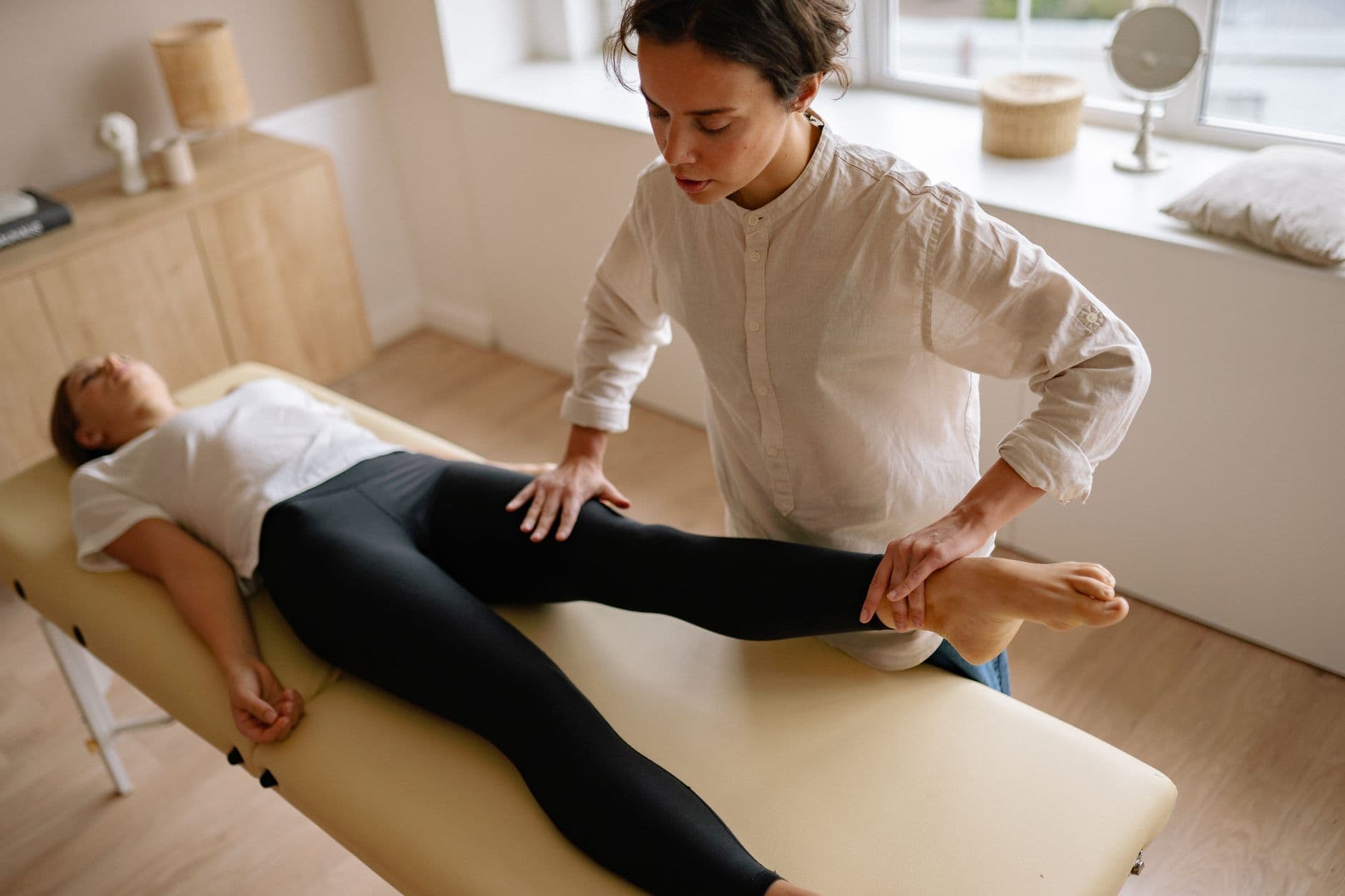
Sciatica is the sharp, burning or electric pain that runs from your lower back or buttock down one leg. It usually gets better in a few weeks to a few months, and a handful of simple steps can make that time easier. This guide covers what helps at home, what the research says about pain medicine, what to avoid, and the few signs that mean you need care today.
Quick answer: how to relieve sciatica pain
Keep moving as much as you can, use heat (or ice in the first few days) for about 20 minutes at a time, and avoid sitting or lying down for long stretches. Over-the-counter pain relievers may take the edge off, but the evidence that they help sciatica is limited, so ask a pharmacist which one is safe for you. Sciatica usually gets better in a few weeks to a few months. If home care has not helped after a few weeks, or the pain is getting worse, have it checked.
Go to an emergency room now if you have numbness around your genitals or bottom, new trouble peeing or controlling your bowels, sciatica in both legs, or weakness in both legs that is severe or getting worse.
What helps in the first few days
These are the first steps the NHS and Cleveland Clinic recommend.
Keep moving, even if it hurts a little
The NHS advice for sciatica is to carry on with your normal activities as much as possible and to start gentle exercise as soon as you can. It also says not to sit or lie down for long periods, because moving, even when it hurts, is not harmful and can help you get better faster.
A short rest in the first day or two is fine. Cleveland Clinic notes that too much rest may make pain worse and slow recovery. A Cochrane review that compared advice to rest in bed with advice to stay active found little or no difference in pain or function for people with sciatica. In other words, staying in bed did not help people with sciatica recover any better than keeping active did.
Heat or ice, about 20 minutes at a time
Cleveland Clinic suggests ice for the first few days and heat after that, using either one for about 20 minutes at a time. The NHS suggests holding heat packs to the painful areas. Use whichever gives you more relief, and keep a cloth between the pack and your skin.
Pain relievers: what the research says for sciatica
Sciatica is nerve pain, and ordinary painkillers help it less than most people expect. The NHS says paracetamol (acetaminophen) is unlikely to help, and that it is not clear how much NSAIDs, the anti-inflammatory group that includes ibuprofen, help with sciatica.
The UK's National Institute for Health and Care Excellence (NICE) says the same in its guideline on low back pain and sciatica. It tells doctors to be aware of the risk of harms and the limited evidence of benefit from NSAIDs in sciatica, to weigh stomach, liver, heart and kidney risks, and to use the lowest effective dose for the shortest possible time. If you try an over-the-counter anti-inflammatory, follow the label, and ask a pharmacist first if you have a health condition or take other medicines.
Stronger prescription medicines are not the answer they seem to be. NICE advises doctors not to offer gabapentinoids (such as gabapentin and pregabalin), other antiepileptic medicines, oral steroids or benzodiazepines for sciatica, because there is no overall evidence of benefit and there is evidence of harm. It also advises against opioids for long-lasting sciatica.
One reason is a randomized trial of 209 people with sciatica published in the New England Journal of Medicine. Pregabalin did not significantly reduce leg pain compared with a placebo over 8 weeks, and it caused more side effects, with dizziness more common. If a doctor suggests one of these medicines for you, ask what benefit to expect and which side effects to watch for. If you already take one, do not stop it on your own. Talk with the doctor who prescribed it first.
Sitting, standing and sleeping
Long spells of sitting are on the NHS list of things not to do, so get up and move around often through the day. Nights can be the hardest part. Our guide on how to sleep with sciatica covers the positions and pillow setups that take pressure off the nerve, and how to get in and out of bed without a jolt of pain.
Gentle movement and stretches
Walking is the simplest place to start. The NHS says anything that gets you moving can help, and Cleveland Clinic lists walking, swimming and yoga as low-impact choices. Begin with short, easy walks and build up as the pain allows.
Cleveland Clinic describes four stretches a physical therapist may teach you for sciatica:
- Bridge. Lie on your back with knees bent and feet flat, tighten your stomach and buttocks, lift your hips until your body makes a straight line, hold a few seconds, then lower slowly.
- Cat-cow. On hands and knees, slowly round your back toward the ceiling, then let your belly drop as you lift your chest and tailbone.
- Knee to chest. Lying on your back, bring one knee toward your chest and hold behind the thigh until you feel a gentle stretch, then switch sides.
- Lower back extension. Lie on your stomach with hands under your shoulders, keep your hips on the floor and gently press up to lift your chest, then lower slowly.
Move slowly and stop at a gentle stretch. Cleveland Clinic's advice is not to push through back pain. If one stretch makes your leg pain worse, leave it out and ask a physical therapist what to do instead. If you have been told you have spinal stenosis, go carefully with the lower back extension: the National Institute of Arthritis and Musculoskeletal and Skin Diseases notes that bending the lower back backward can make stenosis symptoms worse, while sitting or bending forward may ease them.
When a physical therapist helps
If you are not improving on your own, a physical therapist can build a program around your symptoms. NICE recommends considering a group exercise program for a flare-up of low back pain with or without sciatica. It says manual therapy, such as spinal manipulation, mobilization or massage, should be considered only as part of a treatment package that includes exercise.
Why the cause changes what helps
Sciatica is a symptom, not a diagnosis. The NHS explains that it happens when something presses on or rubs against the sciatic nerve. It lists a slipped disc, also called a herniated disc, as the most common cause, along with spinal stenosis (a narrowing of the space around the nerves), spondylolisthesis (one vertebra slipping forward on another) and back injury.
The cause can change which positions feel better. The National Institute of Arthritis and Musculoskeletal and Skin Diseases says leg pain from lumbar spinal stenosis typically gets worse with standing or walking and better when you lean forward. So if walking brings on leg pain that eases when you sit or bend forward, short walks with rest breaks may suit you better than one long walk. The cause also matters for injections, as the section on treatment below explains, which is one reason an examination is worth it when home care has not worked.
What to avoid
- Days in bed. The NHS advises against lying down for long periods, and the Cochrane review above found bed rest no better than staying active for sciatica.
- Long periods of sitting. Break them up by standing and moving.
- Pushing through pain. Ease off any stretch or activity that makes your leg pain worse.
- More medicine than the label allows. NICE advises the lowest effective dose for the shortest time.
- Belts, corsets and traction. NICE advises against offering them for low back pain with or without sciatica.
How long sciatica usually lasts
The NHS says sciatica usually gets better in a few weeks to a few months, but it can sometimes last longer. Cleveland Clinic says many cases improve within four to six weeks without medical treatment, while more severe cases can take longer. Our post on how long sciatica lasts goes through the timeline in more detail.
The NHS advises seeing a doctor if the pain has not improved after a few weeks of home treatment, is getting worse, or is stopping you from doing your normal activities.
Do you need an MRI for sciatica?
Usually not at first. Cleveland Clinic notes that tests usually are not done right away unless symptoms are severe or getting worse. NICE advises against routinely offering imaging outside a specialist setting for low back pain with or without sciatica, and says specialists should consider it only if the result is likely to change the treatment plan.
A scan earns its place when an injection or surgery is being considered. At that point the doctor wants to see whether the side and level of the nerve pressure on the MRI match your symptoms and examination.
Go to the emergency room now if you have these
Most sciatica is painful but not dangerous. The NHS lists these signs as needing emergency care right away:
- Sciatica on both sides
- Weakness or numbness in both legs that is severe or getting worse
- Numbness around or under your genitals, or around your bottom
- Trouble starting to pee, not being able to pee, or not being able to control when you pee, when this is not normal for you
- Not noticing when you need to poo, or not being able to control it, when this is not normal for you
These can be signs of cauda equina syndrome, a rare condition in which the nerves at the bottom of the spine are compressed. It needs urgent care, so call 911 or go to an emergency room rather than waiting for an appointment.
Book a visit soon, rather than going to the emergency room, if the pain is not improving after a few weeks, is getting worse, or is stopping you from doing normal things. Cleveland Clinic adds that moderate to severe pain, numbness, tingling or muscle weakness needs medical care.
When home care is not enough
Most people never need more than the steps above. When the pain is severe or is not settling, care usually moves forward in steps.
What a sciatica visit covers
On Mountain Spine's sciatica doctor page, a first visit is laid out like this:
- You map where the pain, numbness or tingling travels.
- The doctor checks strength, reflexes, sensation and how you walk, and uses nerve-tension tests to find which nerve root may be irritated.
- Any MRI or other scans are reviewed to see whether the side and level of compression match the examination.
- The doctor explains whether monitoring, pain management, a targeted injection or surgery fits your case.
Injections
An epidural steroid injection places medicine near the irritated nerve root. NICE advises considering epidural injections of a local anesthetic and a steroid for people with acute and severe sciatica. It advises against them for neurogenic claudication, the leg pain with walking, in people with central spinal canal stenosis, which is one more reason the cause needs to be known first. Our post on how long an epidural steroid injection lasts explains what to expect.
When surgery comes up
Surgery is for a minority of people. NICE advises considering spinal decompression for sciatica when non-surgical treatment has not improved pain or function and the imaging findings are consistent with the symptoms.
Timing is often the real question. In a randomized trial of 283 people who had severe sciatica for 6 to 12 weeks, those assigned to early surgery got relief from leg pain faster. Of the people assigned to keep up non-surgical care, 39% went on to have surgery. At one year, the chance of feeling recovered was 95% in both groups. If surgery is on the table for you, our guide to sciatica surgery covers when it is needed and how recovery goes.
Keeping sciatica from coming back
The NHS suggests these steps to lower the chance of sciatica returning:
- Stay active and exercise regularly.
- Use a safe technique when lifting heavy objects.
- Keep a good posture when sitting and standing, and set up your computer so you sit correctly.
- Lose weight if you are overweight.
- Do not smoke. The NHS says smoking can increase your risk of getting sciatica.
Your next step
Give home care a fair try: keep moving, use heat or ice, and be careful with medicine. If you are not clearly better after a few weeks, if the pain is getting worse, or if it keeps coming back, have it examined. You can find a Mountain Spine doctor near you through the sciatica doctor page.
Frequently Asked Questions
Answers to the most common patient questions about this topic.
What is the fastest way to relieve sciatica pain?
There is no proven shortcut. The usual first steps, recommended by the NHS and Cleveland Clinic, are to keep moving instead of resting in bed, use heat or ice for about 20 minutes at a time, and avoid long periods of sitting or lying down. Over-the-counter pain relievers may help a little, though the NHS says paracetamol is unlikely to help and it is not clear how much NSAIDs such as ibuprofen help. Go to an emergency room if you have sciatica in both legs, weakness or numbness in both legs that is severe or getting worse, numbness around your genitals or bottom, or new trouble controlling your bladder or bowels.
Is walking good for sciatica?
For most people, yes. The NHS advises carrying on with normal activities and starting gentle exercise as soon as you can, and Cleveland Clinic lists walking as a good low-impact choice. Start with short, easy walks. If you have spinal stenosis, walking may bring on leg pain that eases when you sit or lean forward, so shorter walks with rest breaks may work better.
Can sciatica go away on its own?
Usually, yes. The NHS says sciatica usually gets better in a few weeks to a few months, and Cleveland Clinic says many cases improve within four to six weeks without medical treatment. If it has not improved after a few weeks of home care, is getting worse, or is stopping you from doing normal activities, see a doctor.
Should I use heat or ice for sciatica?
Either is reasonable. Cleveland Clinic suggests ice for the first few days and heat after that, for about 20 minutes at a time, and the NHS suggests heat packs on the painful areas. Keep a cloth between the pack and your skin and use whichever gives you more relief.
Do I need an MRI for sciatica?
Usually not at first. Cleveland Clinic says tests usually are not done right away unless symptoms are severe or getting worse, and the UK's NICE guideline advises specialists to consider imaging only if the result is likely to change treatment. An MRI becomes useful when an injection or surgery is being considered.
When is sciatica an emergency?
Call 911 or go to an emergency room if you have sciatica in both legs, weakness or numbness in both legs that is severe or getting worse, numbness around your genitals or bottom, or new trouble controlling your bladder or bowels. These can be signs of cauda equina syndrome, a rare condition that needs urgent care.