
Back and neck pain are extremely common, and most cases improve without surgical treatment. In fact, research shows that nearly 90 percent of back pain episodes resolve with rest, physical therapy, medication, or chiropractic care. However, when symptoms do not improve or begin to worsen, it may be a sign of a deeper structural problem inside the spine.
Chiropractors can help with mobility and short term symptom relief, but they cannot correct conditions involving severe nerve compression, spinal instability, disc collapse, or spinal cord pressure. These issues require evaluation from a spine surgeon who can identify what is causing the problem and recommend the most appropriate treatment, including minimally invasive options that allow for quicker recovery.
Below are the 10 most important signs that it is time to see a spine surgeon.
1. Your Pain Has Lasted More Than 6 to 12 Weeks
Back or neck pain that lasts more than 6 to 12 weeks is considered chronic. At this point, the discomfort is more likely due to a structural spine problem rather than a simple muscle strain. Chronic pain often indicates disc degeneration, nerve inflammation, or narrowing of the spinal canal.
People with chronic symptoms sometimes notice the pain becoming more persistent, returning more frequently, or spreading to new areas. Conservative care may bring temporary relief, but long term improvement usually requires evaluating the underlying cause through imaging and specialist assessment.
Common chronic conditions include:
• Herniated Disc
• Degenerative Disc Disease
• Spinal Stenosis
2. You Have Pain That Shoots Down the Arm or Leg

Radiating pain, also called radiculopathy, occurs when a spinal nerve becomes compressed or irritated. This pain often feels sharp, electric, burning, or deep. It may travel down the shoulder and arm in cervical spine problems, or down the buttock and leg in lumbar spine conditions.
This type of pain rarely improves with adjustments alone because the source is mechanical compression, not alignment. The longer a nerve remains compressed, the higher the chance of long term or permanent damage.
Common causes include:
• Lumbar Herniated Disc
• Cervical Herniated Disc
• Sciatica and Nerve Pain
3. Your MRI Shows a Large Herniated Disc
If an MRI confirms a large disc herniation, especially one that is pressing on a nerve root or the spinal cord, a spine surgeon should evaluate the findings. Large herniations often cause severe pain, numbness, tingling, or weakness. In some cases the disc material can fragment or migrate, creating additional pressure on the nerve.
Chiropractic manipulation cannot reduce disc material or relieve nerve compression in these situations. Minimally invasive procedures such as microdiscectomy may be recommended to remove the portion of the disc that is pressing on the nerve and provide lasting relief.
Relevant treatments include:
• Lumbar Microdiscectomy
• Endoscopic Discectomy
4. You Are Losing Strength in Your Arms or Legs
Muscle weakness is one of the clearest indicators of nerve dysfunction. Patients may find it difficult to pick up objects, grip items, raise their arms, climb stairs, or push off with the legs. Weakness often indicates that the nerve is under significant and possibly progressive compression.
When nerve signals are blocked or interrupted, the affected muscles may weaken or shrink over time. This is a medical concern and requires prompt evaluation. Chiropractic manipulation should be avoided once weakness begins, because it may worsen instability or compression.
Find a specialist here:
Find a Doctor
5. You Have Numbness, Tingling, or Burning Sensations
Numbness and tingling are signs that a nerve is no longer functioning properly. Patients may feel pins and needles in the shoulders, arms, hands, buttocks, legs, or feet. These symptoms often develop when a nerve is irritated, compressed, or inflamed.
If numbness persists, it may gradually turn into weakness or even permanent nerve loss. Evaluation from a spine surgeon can determine whether decompression is required.
These symptoms are common in:
• Pinched Nerve
• Foraminal Stenosis
• Disc herniation
• Spinal stenosis
6. Your Pain Is Worse When Standing or Walking
Some patients can sit comfortably but feel severe pain, burning, or heaviness in the legs when standing or walking. This is a classic sign of neurogenic claudication, which often occurs when the spinal canal narrows and compresses the nerves.
Patients may notice that leaning forward or sitting reduces symptoms. This pattern is common in lumbar spinal stenosis. Without intervention, the symptoms may gradually worsen and reduce mobility.
Learn more about spine narrowing here:
• Spinal Stenosis
7. You Have Difficulty Walking or Maintaining Balance
Balance issues, leg fatigue, unsteadiness, or trouble coordinating fine movements often indicate compression of the spinal cord or major nerve roots. Patients may feel that their legs are heavy or weak, or that they must stop frequently due to discomfort.
Cervical myelopathy and lumbar spinal stenosis are common causes. These conditions tend to worsen over time and can lead to significant disability if not properly treated.
More information here:
Neck Spinal Stenosis
8. You Have Tried Chiropractic Care or Physical Therapy Without Relief
Most patients begin with conservative treatments, including rest, medication, chiropractic adjustments, and physical therapy. If several weeks of treatment do not provide meaningful improvement, or if symptoms return quickly, further testing is needed to determine whether a surgical solution is appropriate.
Structural issues such as severe disc herniations, bone spurs, or instability typically require targeted treatment. Minimally invasive surgery may offer long term relief when conservative methods fail.
Common surgical options include:
• Microdiscectomy
• Laminectomy
• Cervical Disc Replacement
9. Your Pain Started After a Car Accident or Fall
Traumatic injuries often cause structural damage that cannot be corrected through stretching or adjustments. Car accidents and falls may result in fractures, ligament tears, disc herniations, and instability. Some of these injuries worsen over time and can lead to long term nerve damage.
A spine surgeon evaluates the extent of the injury using MRI or CT imaging, and determines whether stabilization or decompression is necessary.
Related pages:
• Car Accident Injuries
• Slip and Fall Injuries
10. You Have Bowel or Bladder Changes
Sudden difficulty urinating, bowel incontinence, or numbness in the groin or inner thighs may indicate cauda equina syndrome. This condition occurs when nerves at the base of the spine become severely compressed. It is a medical emergency and requires urgent surgical attention to prevent permanent damage.
If these symptoms appear, seek emergency care immediately.
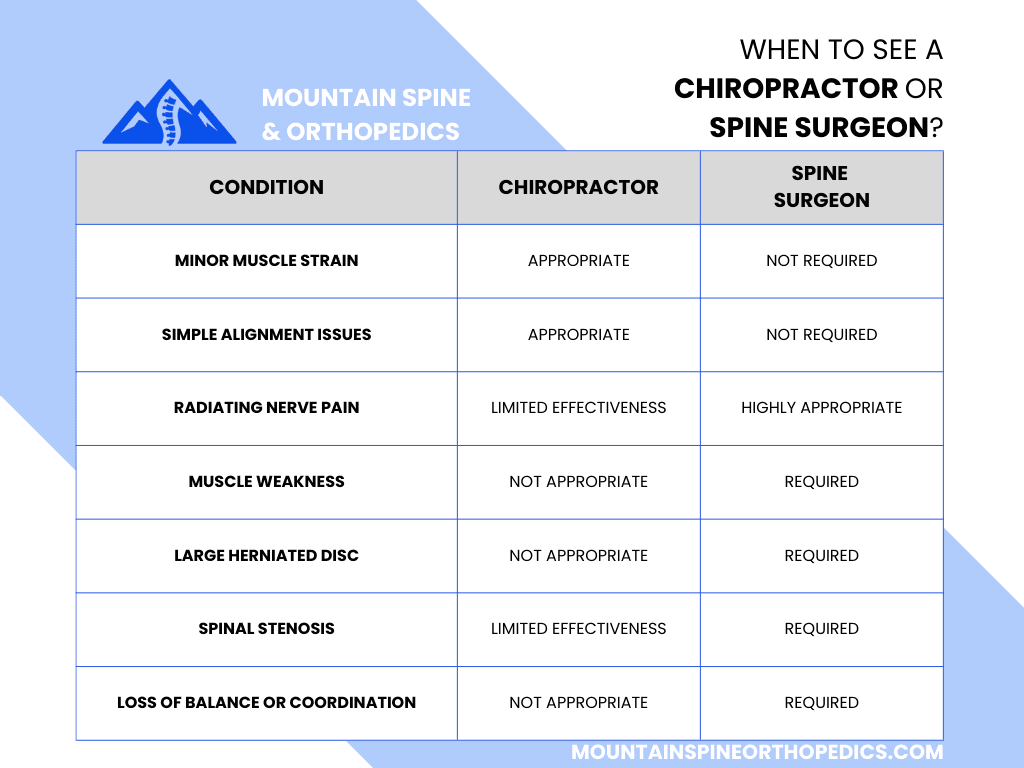
Comparison Guide: Chiropractor vs Spine Surgeon
Below is a simple comparison to help patients understand the differences in training, capabilities, and appropriate conditions for each provider.
Modern Minimally Invasive Spine Surgery
Minimally invasive spine surgery uses small incisions, reduces muscle disruption, and offers faster recovery times when compared to traditional open surgery. Many patients return home the same day. These procedures focus on relieving nerve compression, restoring stability, and improving mobility.
Common minimally invasive procedures include:
• ACDF Surgery
• Artificial Disc Replacement
• TLIF Fusion
• Endoscopic Discectomy
Take the First Step Toward Relief
If you recognize any of the signs above, a spine specialist can help identify the cause of your symptoms and recommend the most effective treatment.
Find a spine specialist
https://mountainspineorthopedics.com/find-care/find-a-doctor
Book an appointment
https://mountainspineorthopedics.com/find-care/book-an-appointment
Free MRI review
https://mountainspineorthopedics.com/find-care/free-mri-review
Frequently Asked Questions
Answers to the most common patient questions about this topic.
When should I see a spine surgeon instead of a chiropractor?
You should see a spine surgeon if your pain is chronic, worsening, or causing numbness, tingling, weakness, or radiating pain. Surgeons evaluate structural problems that chiropractors cannot treat, such as large herniated discs or spinal stenosis.
Can chiropractic care make a herniated disc worse?
Chiropractic care may provide relief for mild issues, but aggressive manipulation can worsen a large or unstable herniation. Severe herniations, especially those affecting nerve function, should be evaluated by a surgeon.
Do herniated discs always require surgery?
No. Many herniated discs improve with conservative treatment. Surgery is recommended when symptoms last more than 6 to 12 weeks, or when weakness or severe nerve pain is present.
What is the difference between an orthopedic spine surgeon and a general orthopedic surgeon?
A general orthopedic surgeon treats a wide range of musculoskeletal conditions. A spine surgeon receives specialized training to diagnose and treat spinal disorders and nerve compression.
Is minimally invasive spine surgery safe?
Yes. Minimally invasive procedures are often safer and allow faster recovery than traditional open surgery. They use smaller incisions and reduce trauma to surrounding tissues.
How do I know if spine surgery is right for me?
A surgeon reviews your MRI, symptoms, and history of treatments. If conservative care has failed or neurological symptoms are present, surgery may be recommended.